UX RESEARCH
WIREFRAMING & PROTOTYPING
USER INTERVIEW
Tasty turns
A collection of sharp, angular black prisms floating against a gradient dark background, showcasing a modern and sophisticated approach to digital 3D geometric composition.
Tools :
Figma, NotebookLM, Mermaid AI
Industry :
Food Tech
Project Duration :
Jan 2025 – May 2025
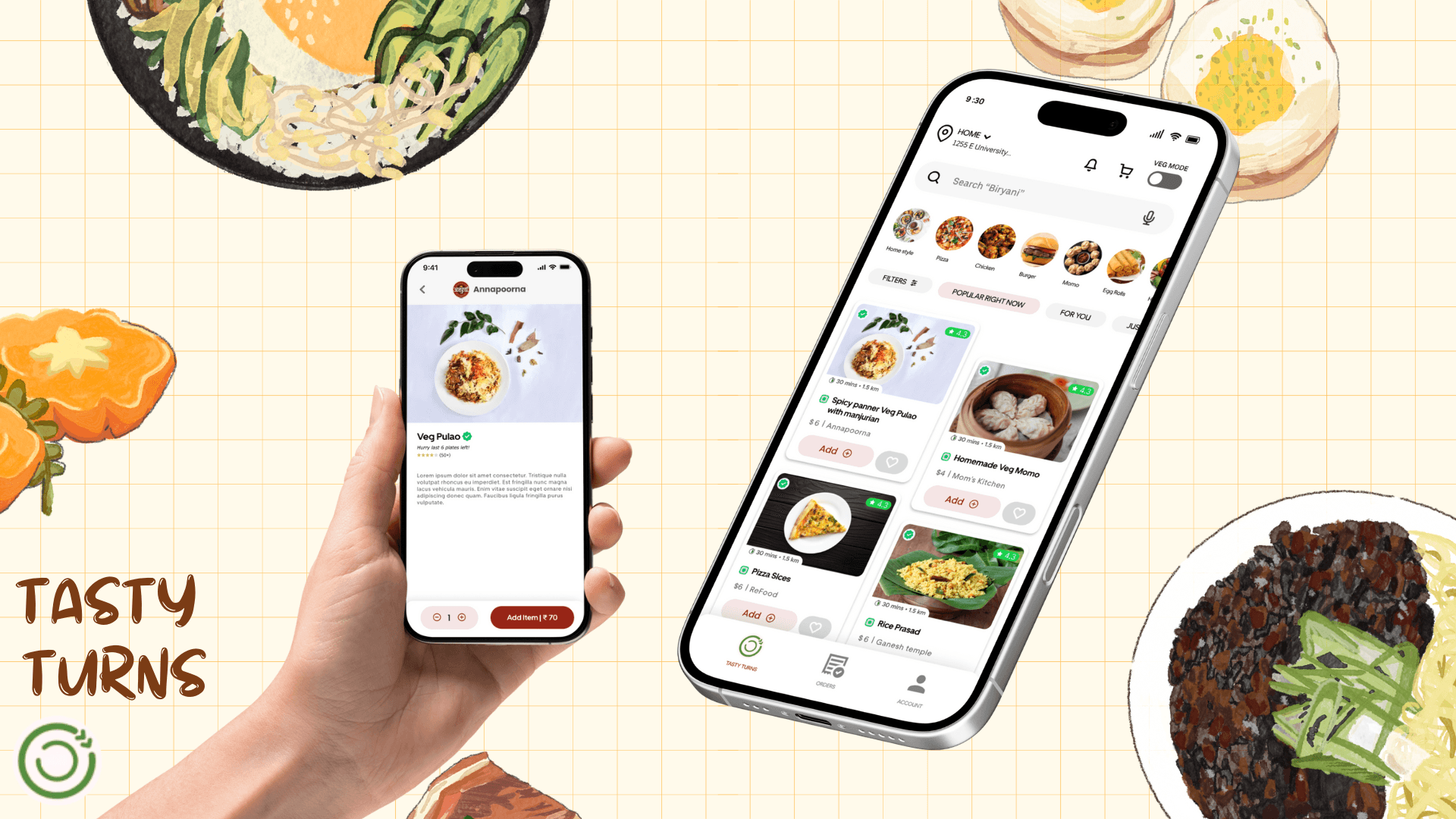
Problem :
Restaurants, homes, universities, temples, and community kitchens produce massive amounts of surplus food that often goes to waste. Meanwhile, many people struggle to access affordable, nutritious meals.
Solution:
Tasty Turns connects surplus food with people looking for affordable meals. Users can:
Browse hot, affordable late-night meals.
Discover surplus food before it’s wasted.
Donate meals or volunteer to redistribute food.
The first prototype focuses on the core ordering flow, making it simple and trustworthy.
Opportunity
Revolutionize the way surplus food is redistributed. Empower local communities to share, sell, or donate extra meals, while offering people reliable, low-cost food options.
The why :
The main problem I aim to address is the imbalance between food surplus and food scarcity.
Every day, large amounts of edible food are wasted across restaurants, schools, supermarkets, events, and even temples — while countless individuals struggle to access affordable meals. This gap between abundance and need wastes resources and misses the chance to feed those in need.
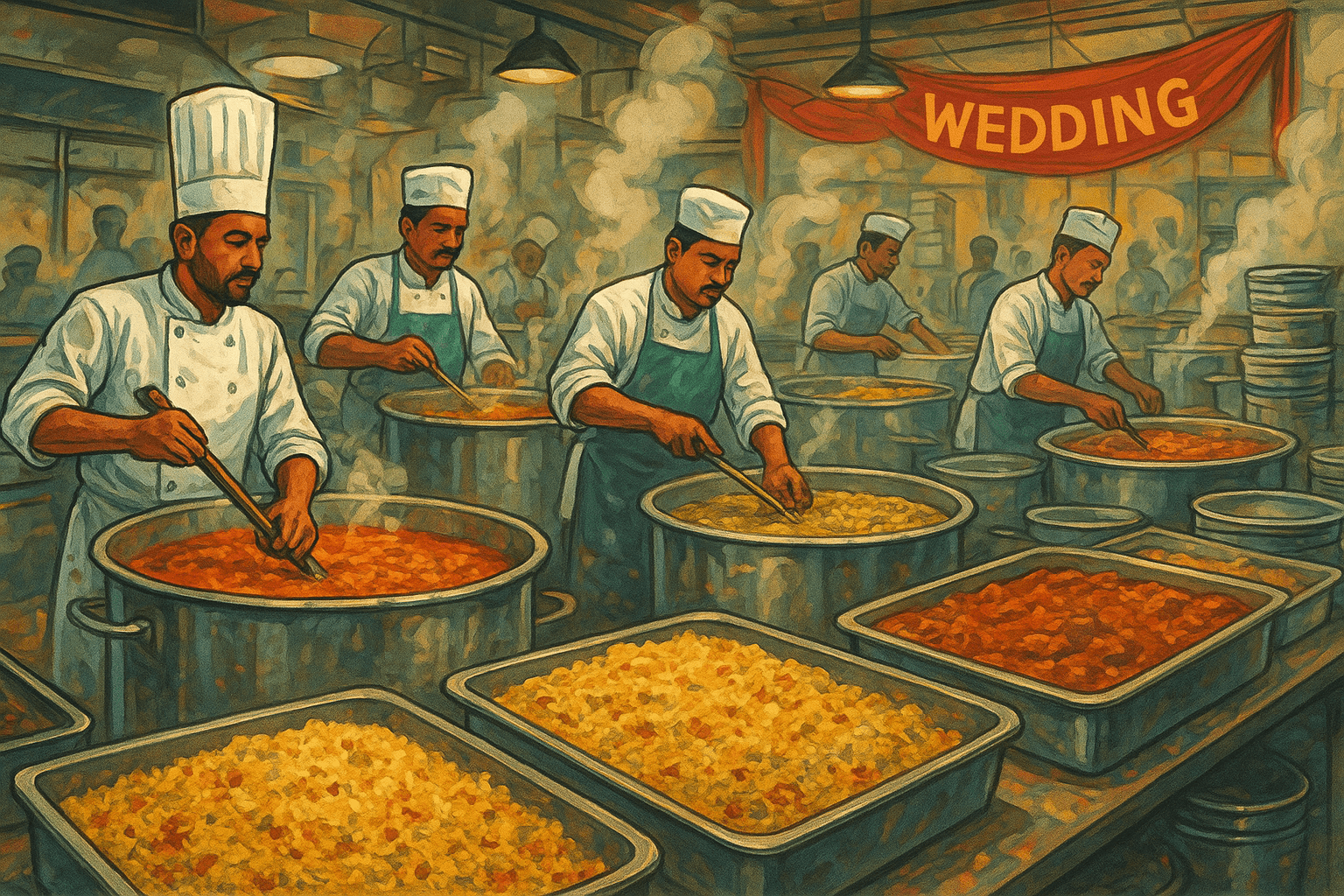
Overproduction & Mismanagement: Bulk cooking for unpredictable crowds leads to unavoidable surpluses.
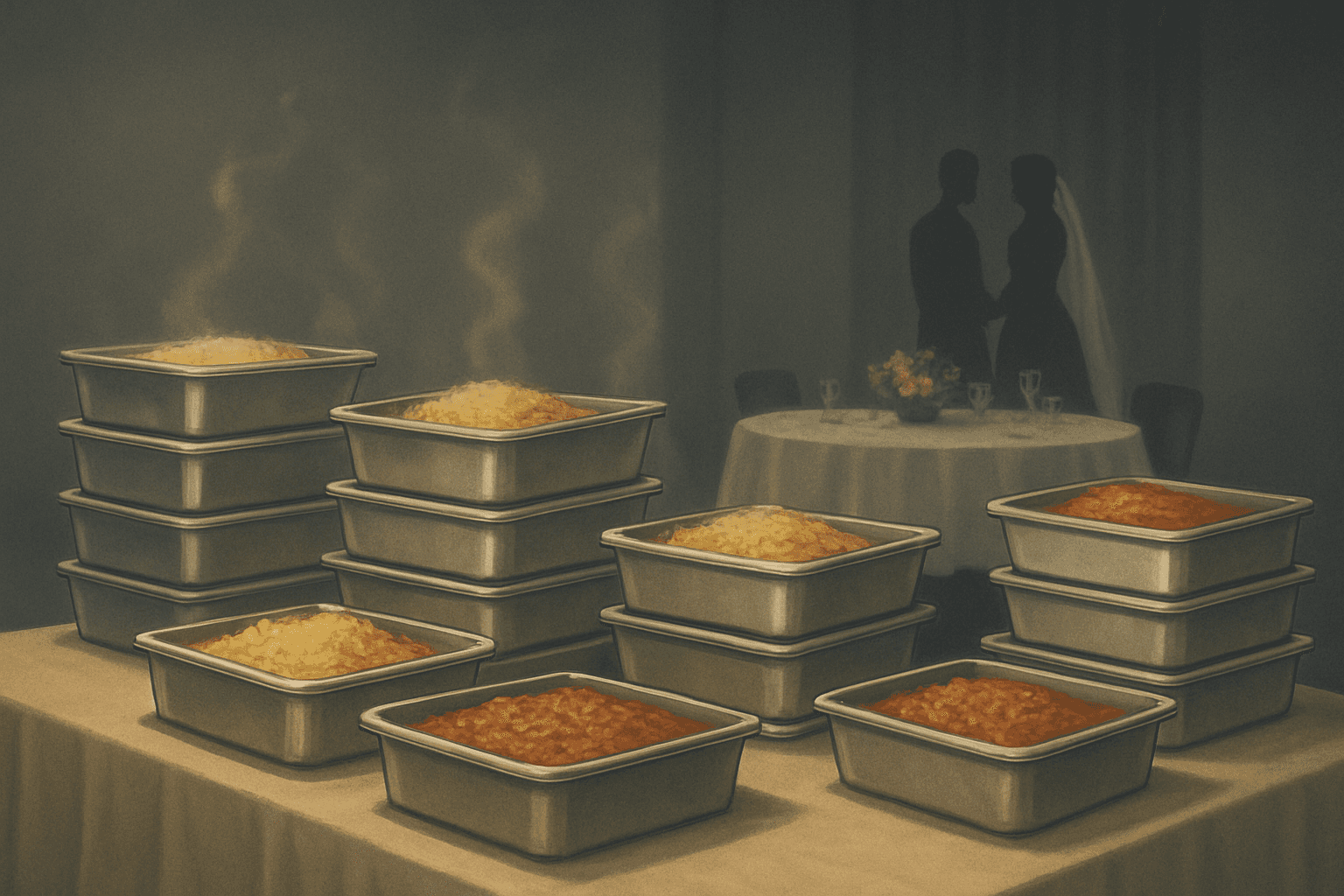
No Redistribution Systems: Families or organizers lack a streamlined way to donate excess food immediately.
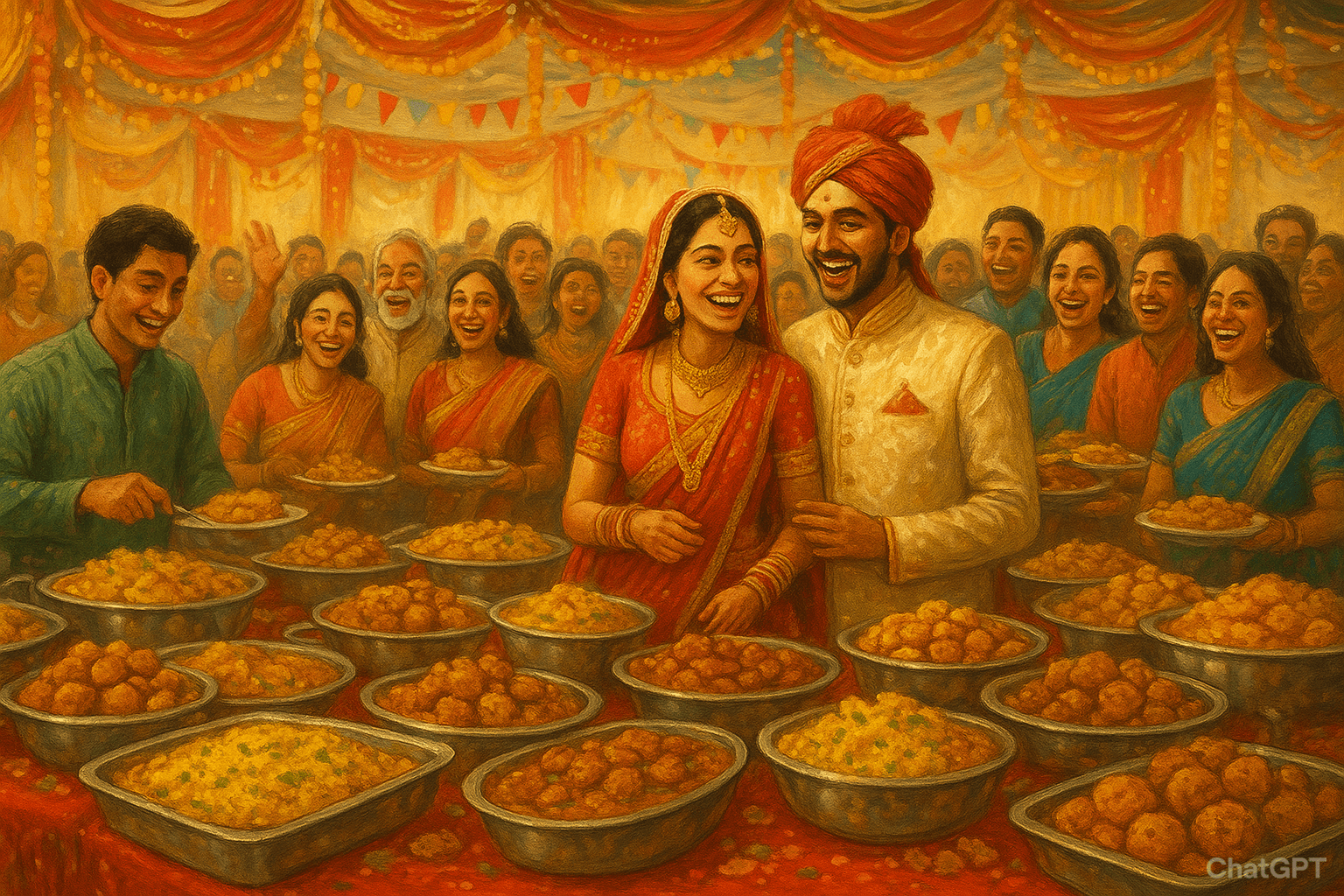
Cultural & Social Factors: Large gatherings prioritize abundance as a symbol of generosity, often leading to excess.
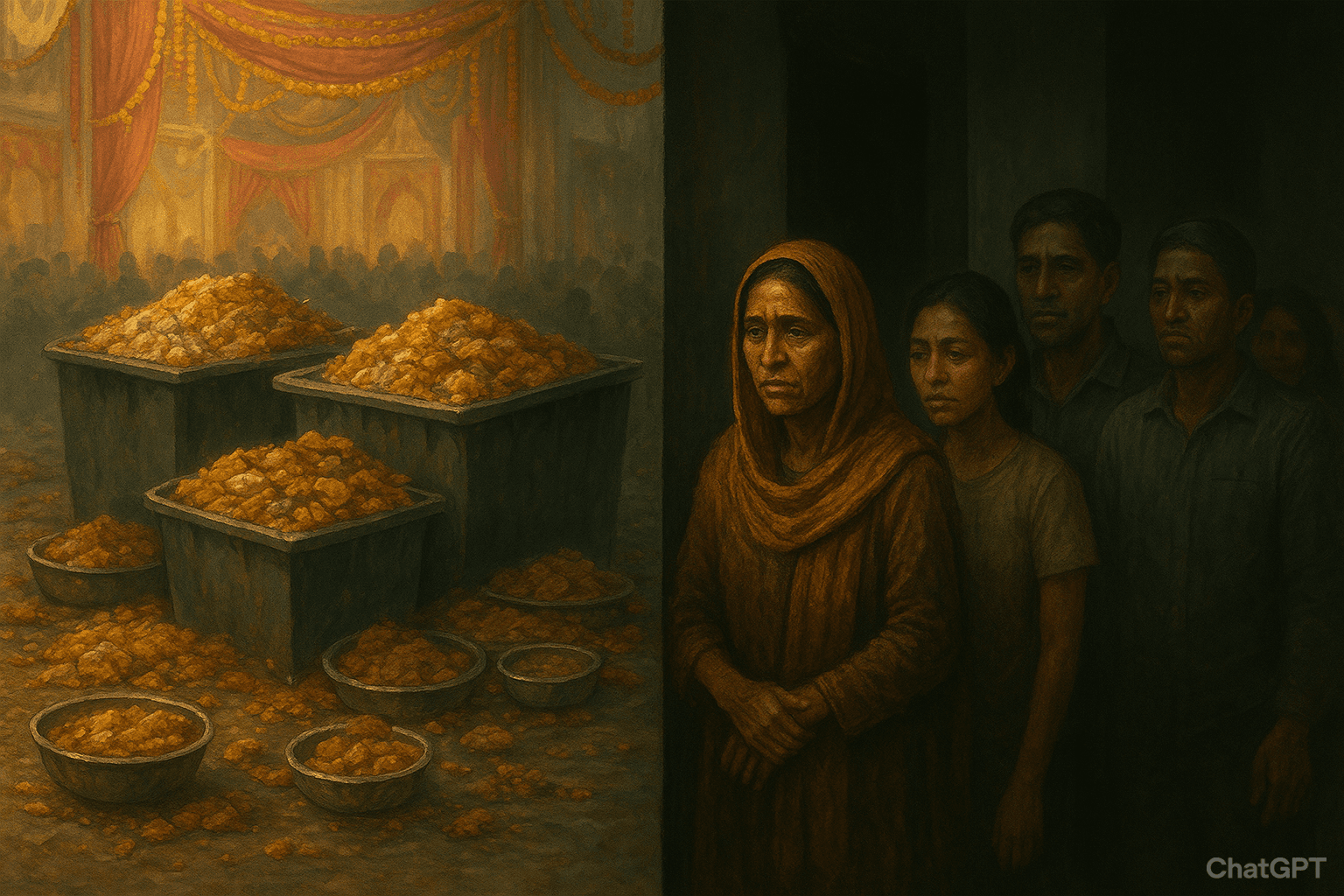
Human & Environmental Cost: Resources, money, and labor go to waste while people remain food insecure.
Real-World Example :
Generosity drives Indian weddings to over-cater for thousands of unpredictable guests, resulting in a massive food surplus. Lacking easy redistribution, this abundant, quality food is often wasted despite local community hunger.
Competitor Analysis :
I analyzed two leading initiatives—No Food Waste and City Harvest—and mapped their strengths and weaknesses to identify where Tasty Turns can uniquely bridge the gaps.
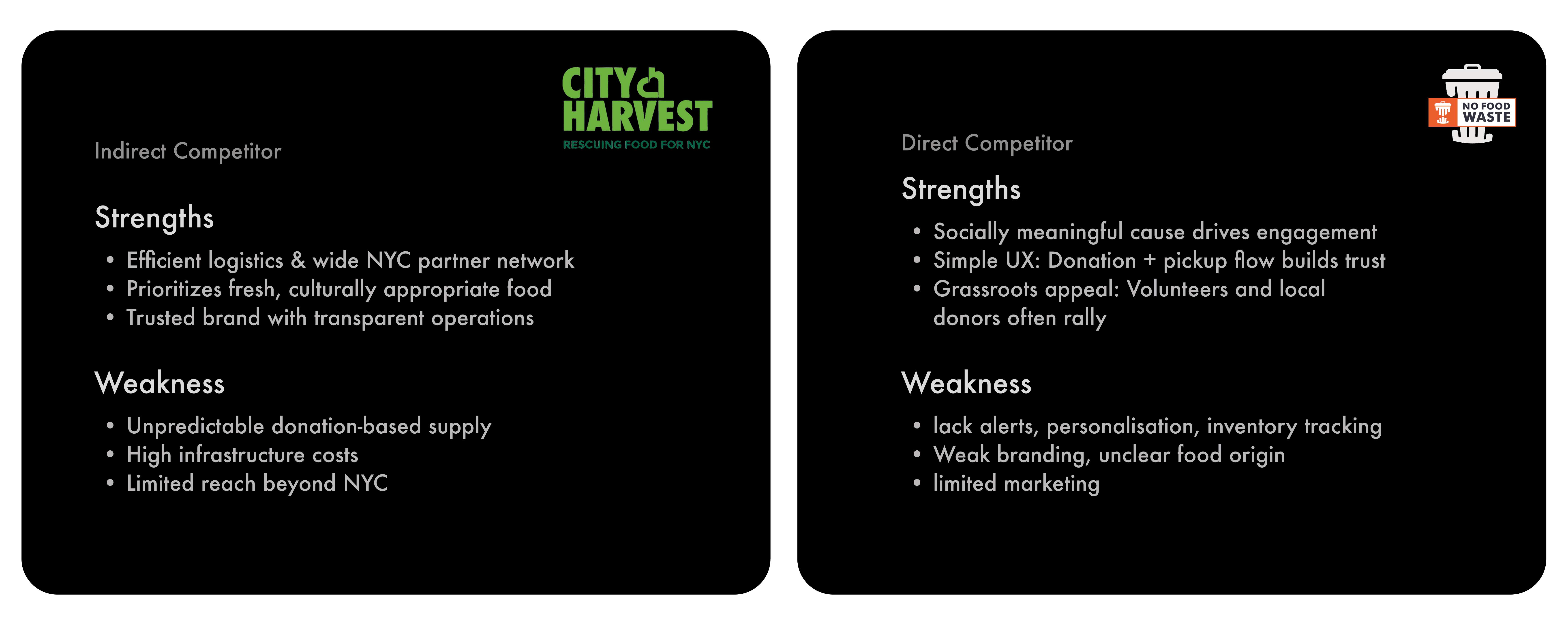
This analysis provided the foundation for defining our key features, differentiators, and opportunities for innovation.
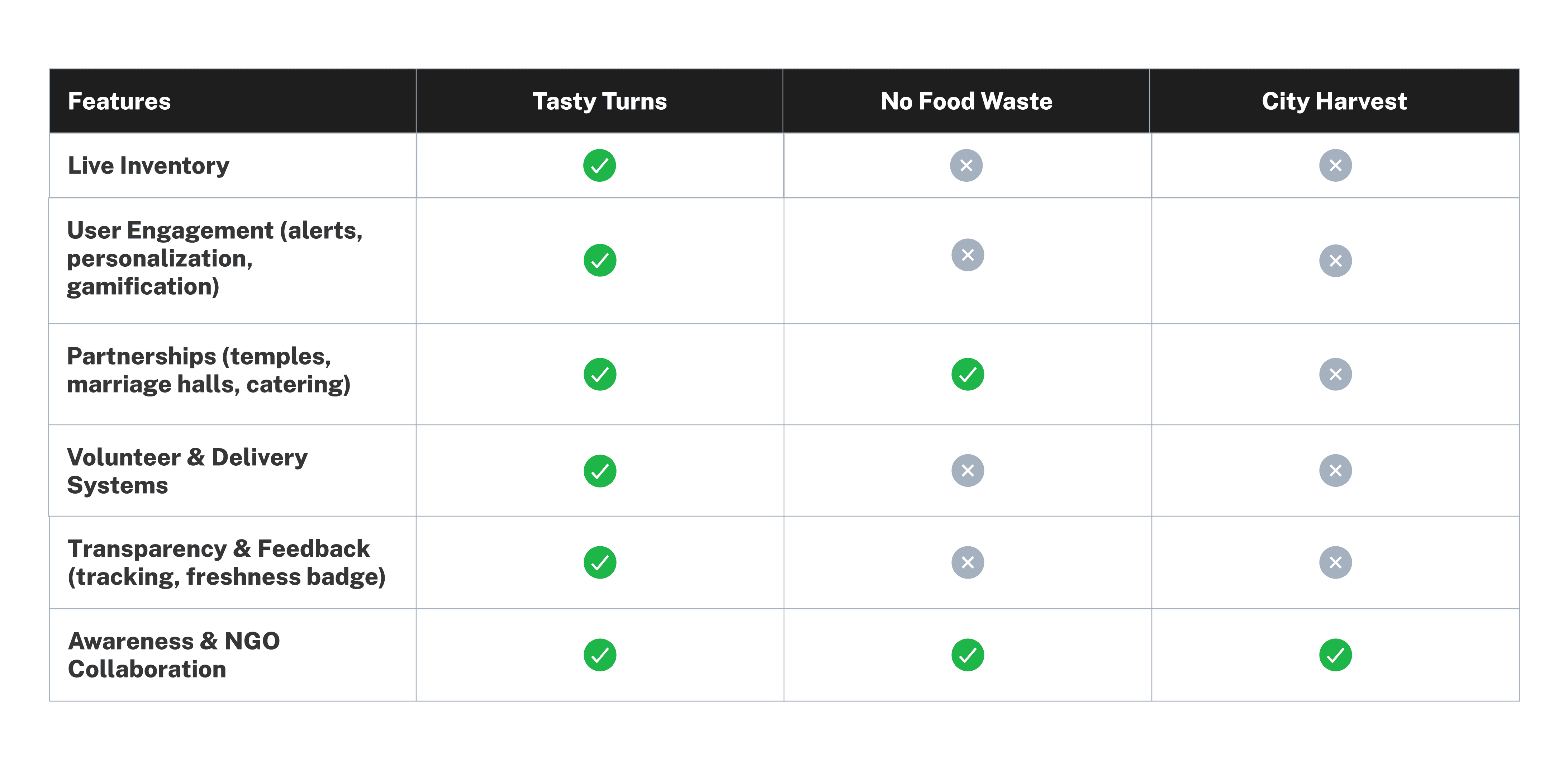
Competitor Feature Comparison
User Interview:
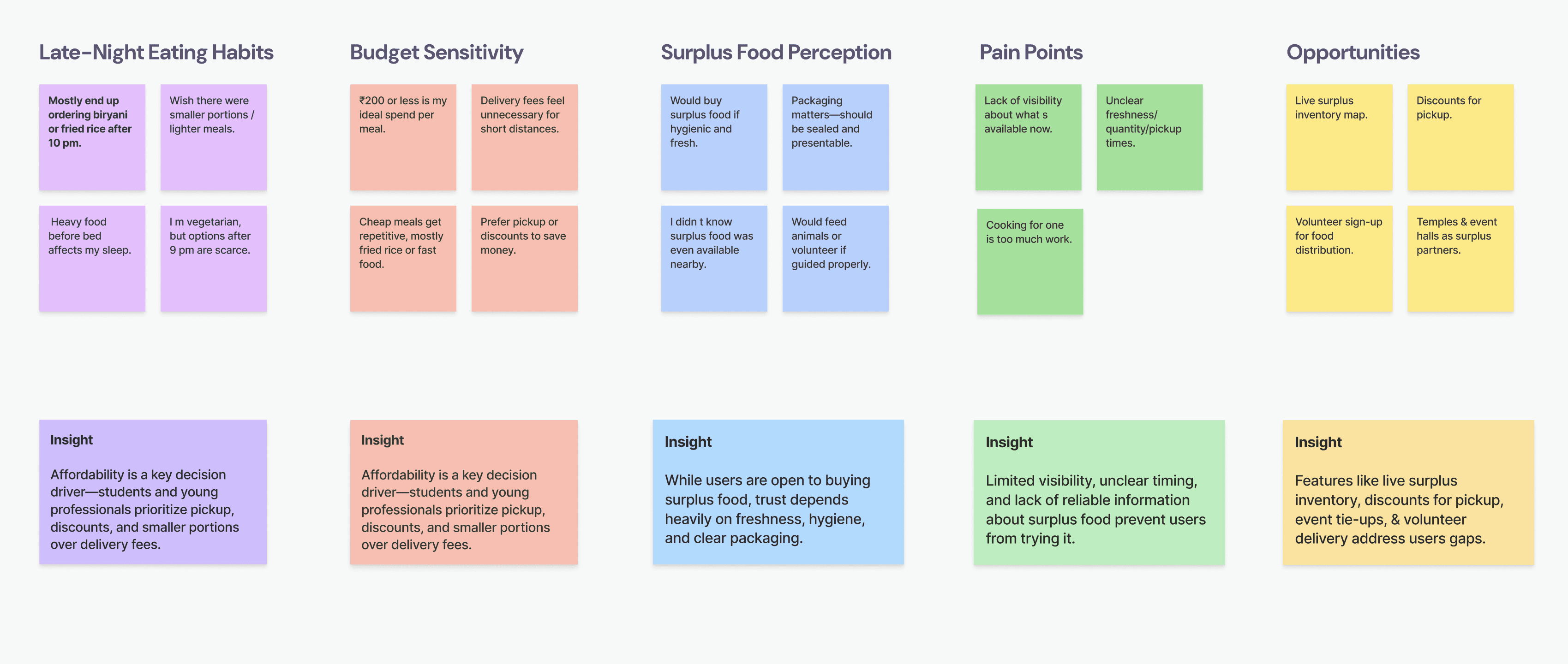
Interviews with students and professionals uncovered:
Demand for affordable, late-night meals.
High willingness to volunteer or donate if safety and convenience were clear.
Low awareness of surplus food availability.
User Quotes :
📌 “I just want something light and healthy after work — not another oily biryani or fried rice.”
📌 “If I know how to find surplus food then I’ll definitely go and feed animals. I’m ready to volunteer.”
📌 “Even if it’s leftover food, if it’s hot, tasty, and clean, I’ll eat it.”
Perception of Surplus Food
Willingness to volunteer for animal, but needs guidance.
Users don’t know surplus food exists nearby.
Users are open to buying surplus food if it’s hygienic, properly packed, and fresh.
Pain Points
Hard to find surplus food nearby.
Concerns about freshness, pickup, and delivery flexibility.
Lack of simple donation options.
User Persona
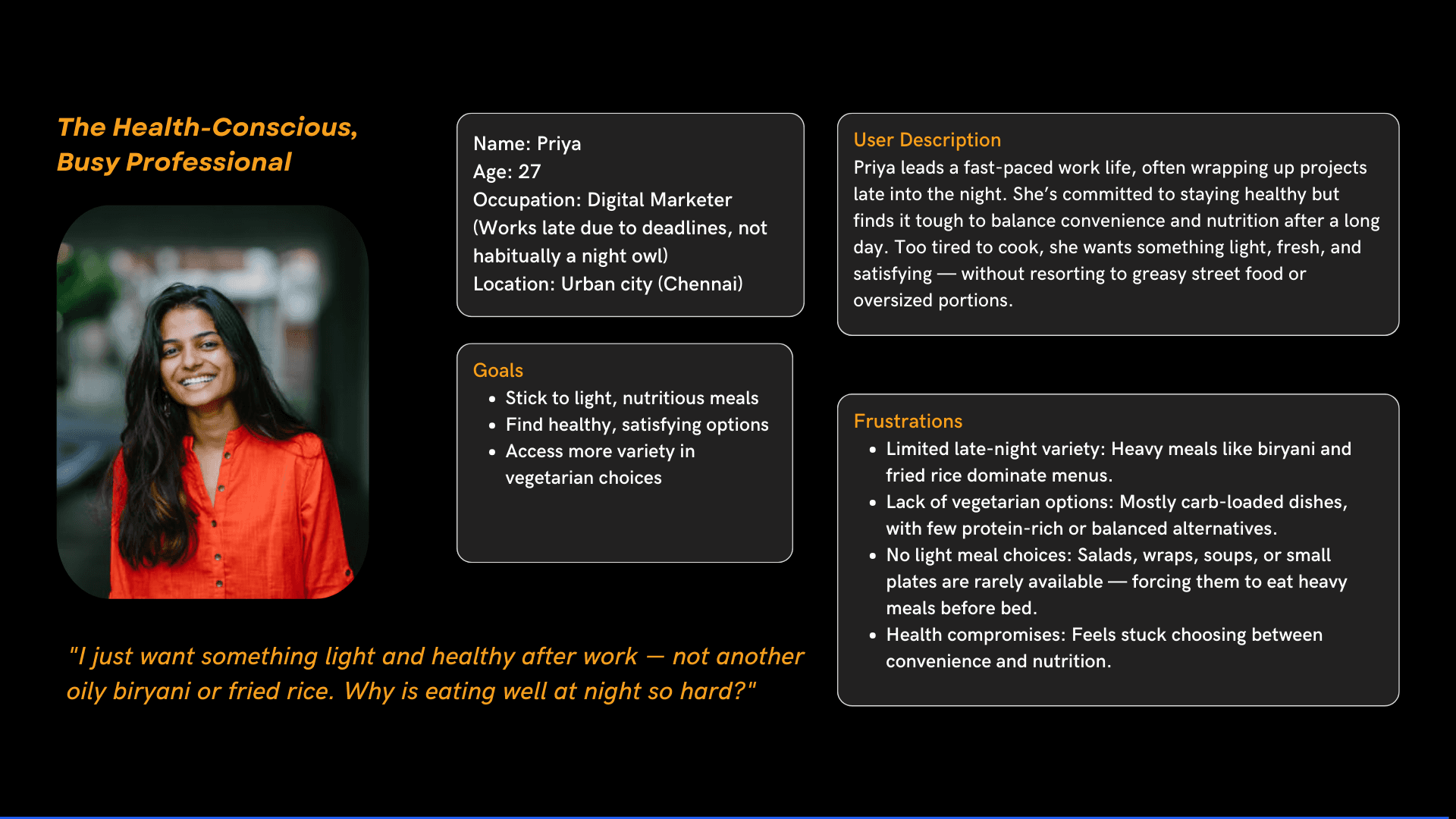
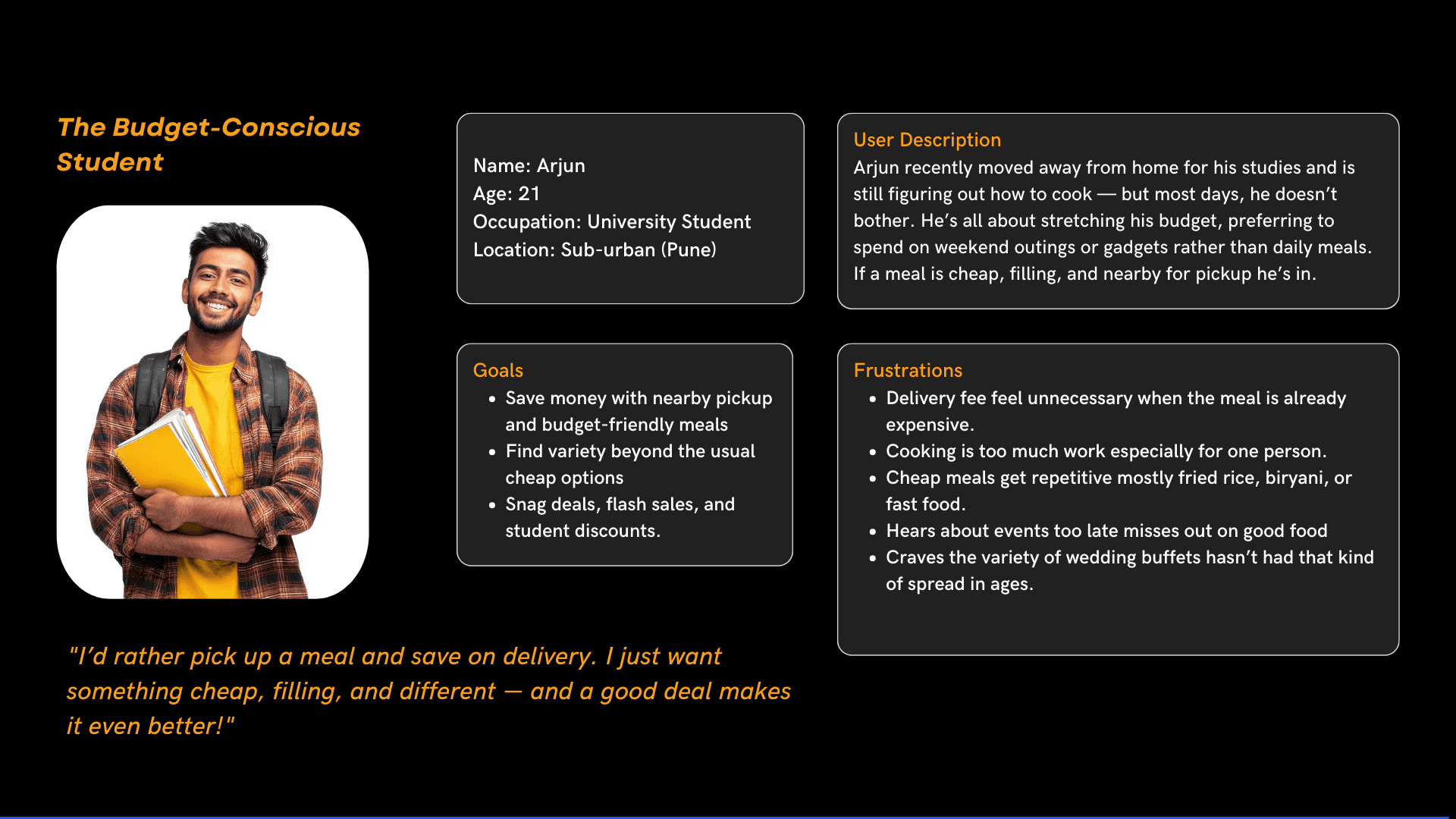
To design Tasty Turns around real needs, I developed two core user personas based on research, interviews, and observation. These personas reflect the two primary audience segments most affected by food surplus and scarcity — and their motivations helped shape the features and flows of the app.
Root cause analysis
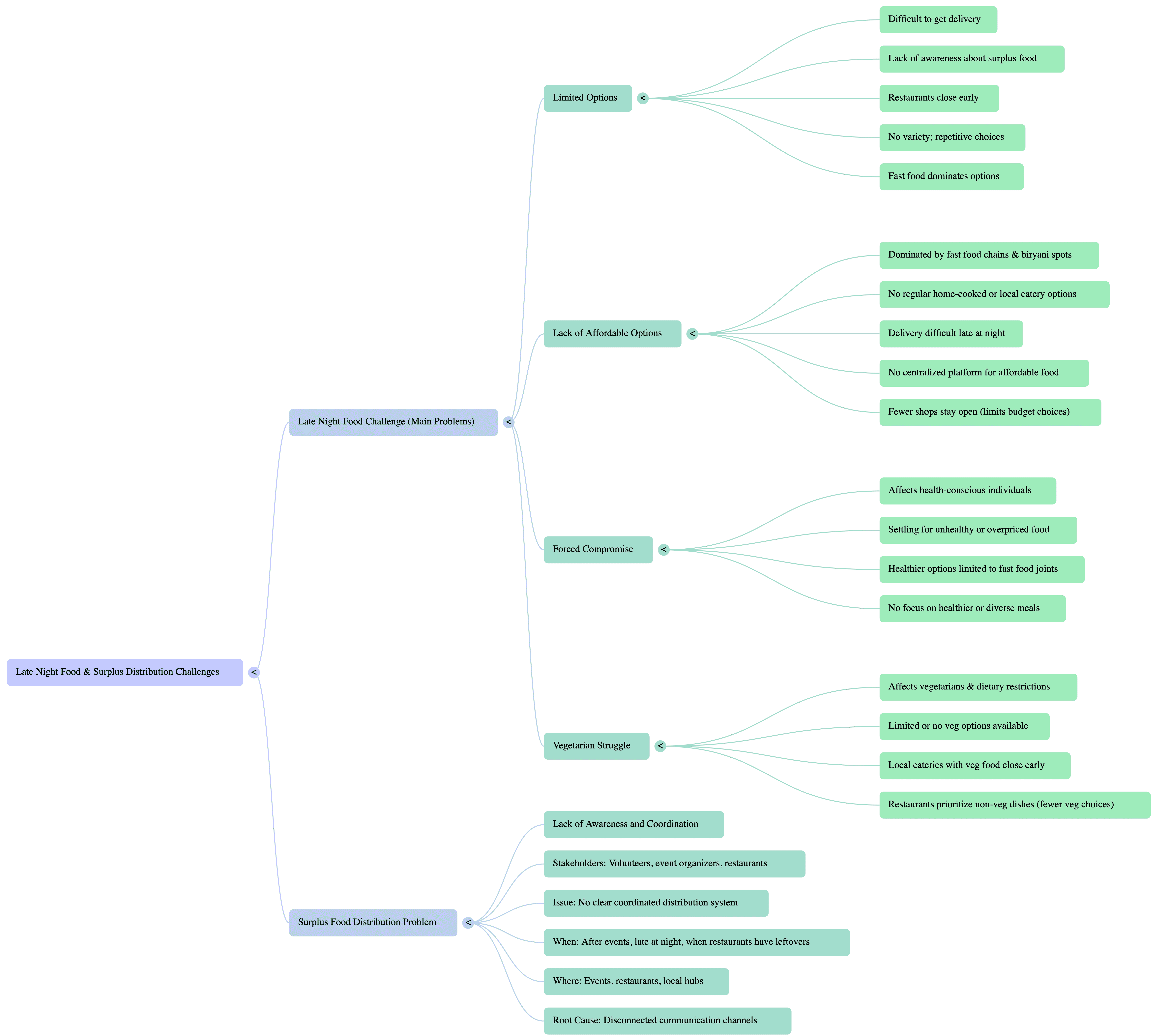
To understand why food waste and meal accessibility challenges persist, I conducted a Root Cause Analysis Using the 5 Why's technique and cause-and-effect mapping.
Key Takeaways
A central hub can connect donors, NGOs, volunteers, and late-night seekers.
Affordable, varied meals attract students and health-conscious users.
Better coordination reduces waste and boosts efficiency.
Design must serve diverse user groups for real impact.
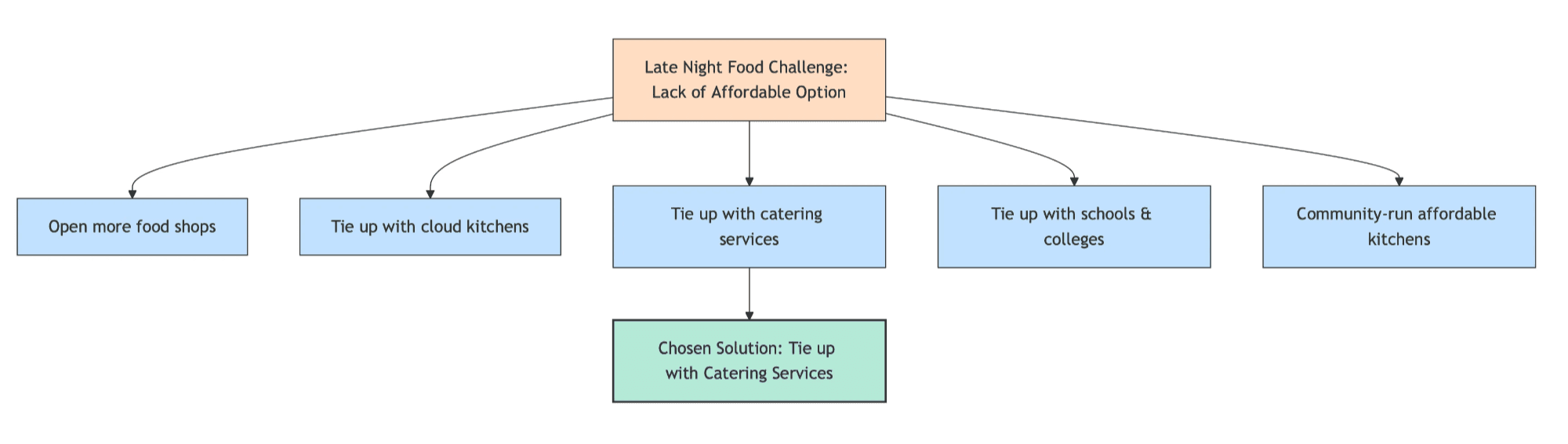
Convergence and divergence
Generated multiple solutions — then narrowed to the most impactful: partnerships with venues, a transparent ordering system, and a volunteer network.
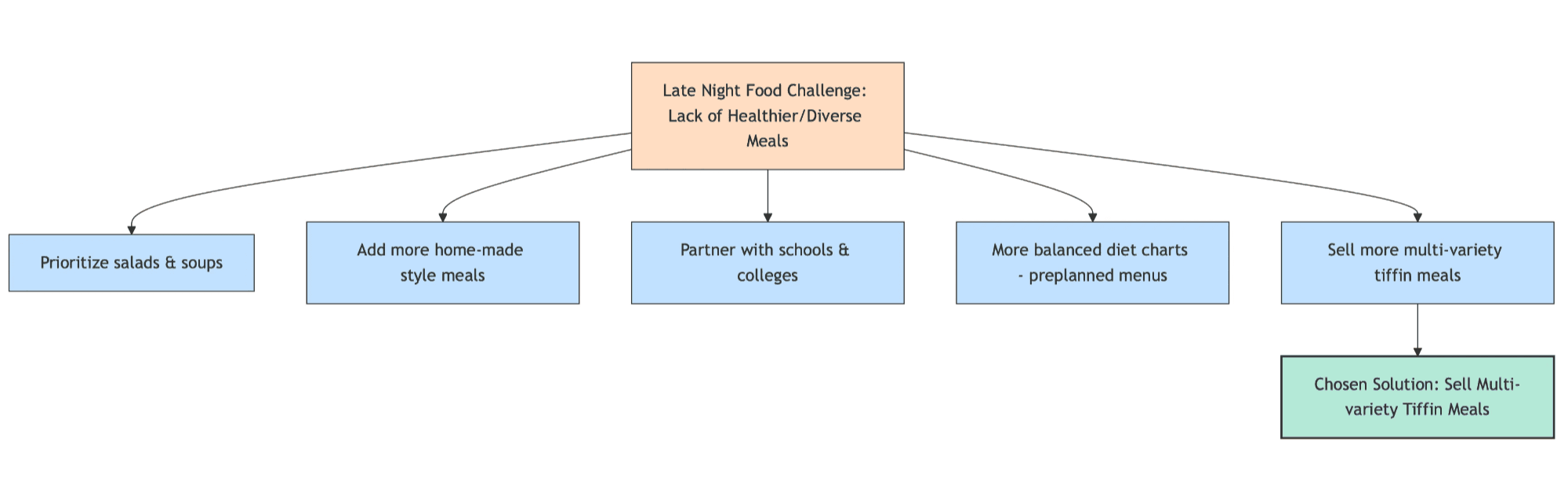
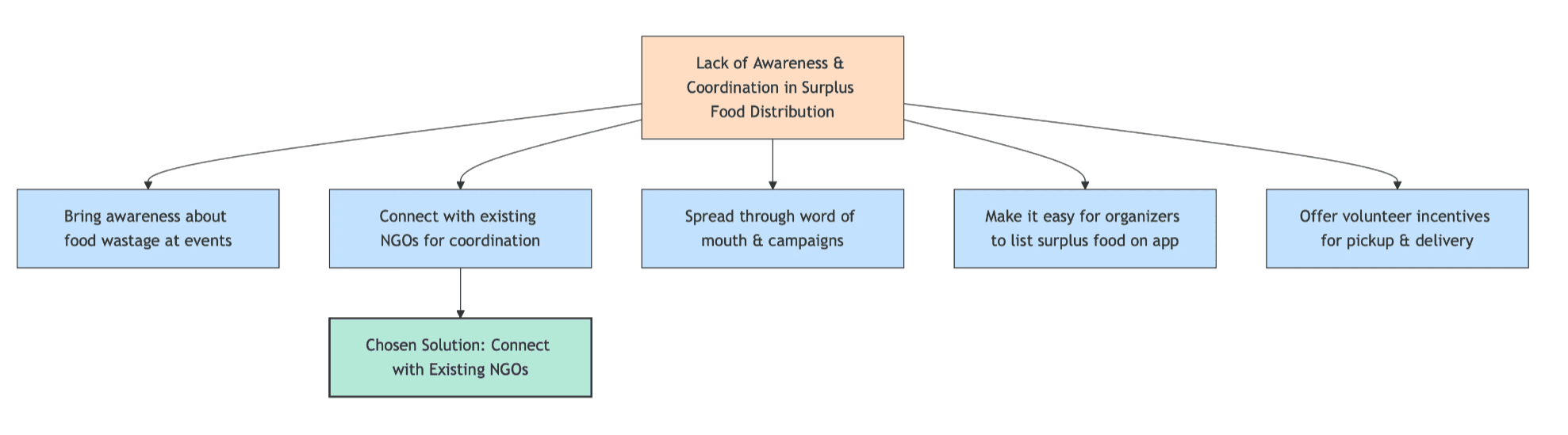
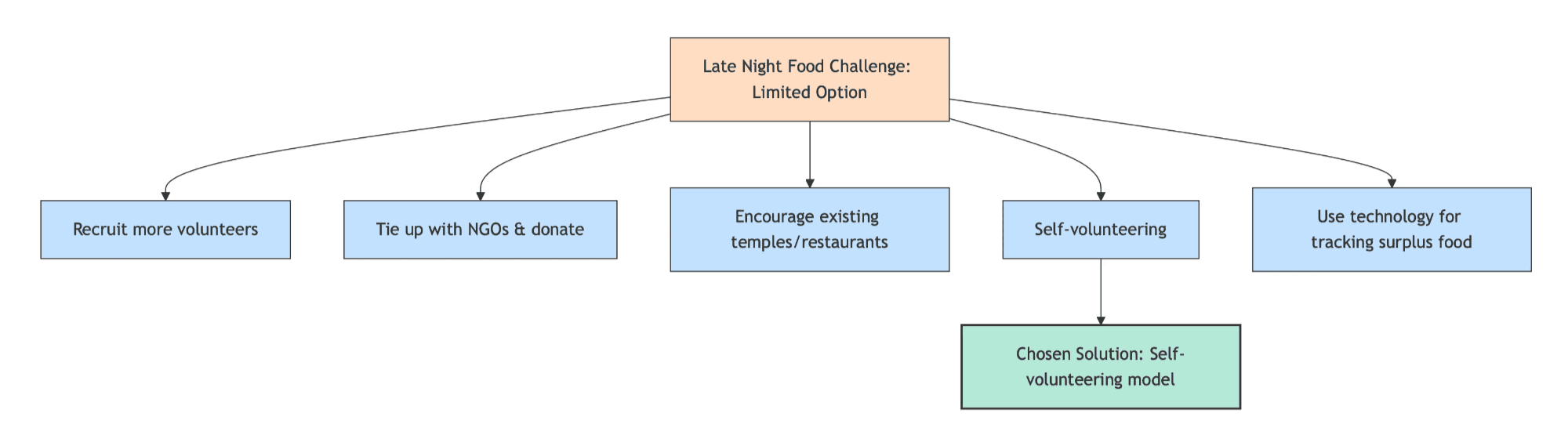
I created a user flow to visualize how customers would interact with Tasty Turns from browsing food items to making a purchase and optionally donating food. This allowed us to identify key decision points, minimize unnecessary steps, and ensure a seamless experience for both primary use cases — food ordering and food donation.
User Flow

Focused on layout, navigation, and clear calls to action across key screens to validate core structure before detailed UI design.
Low-Fidelity Wireframes
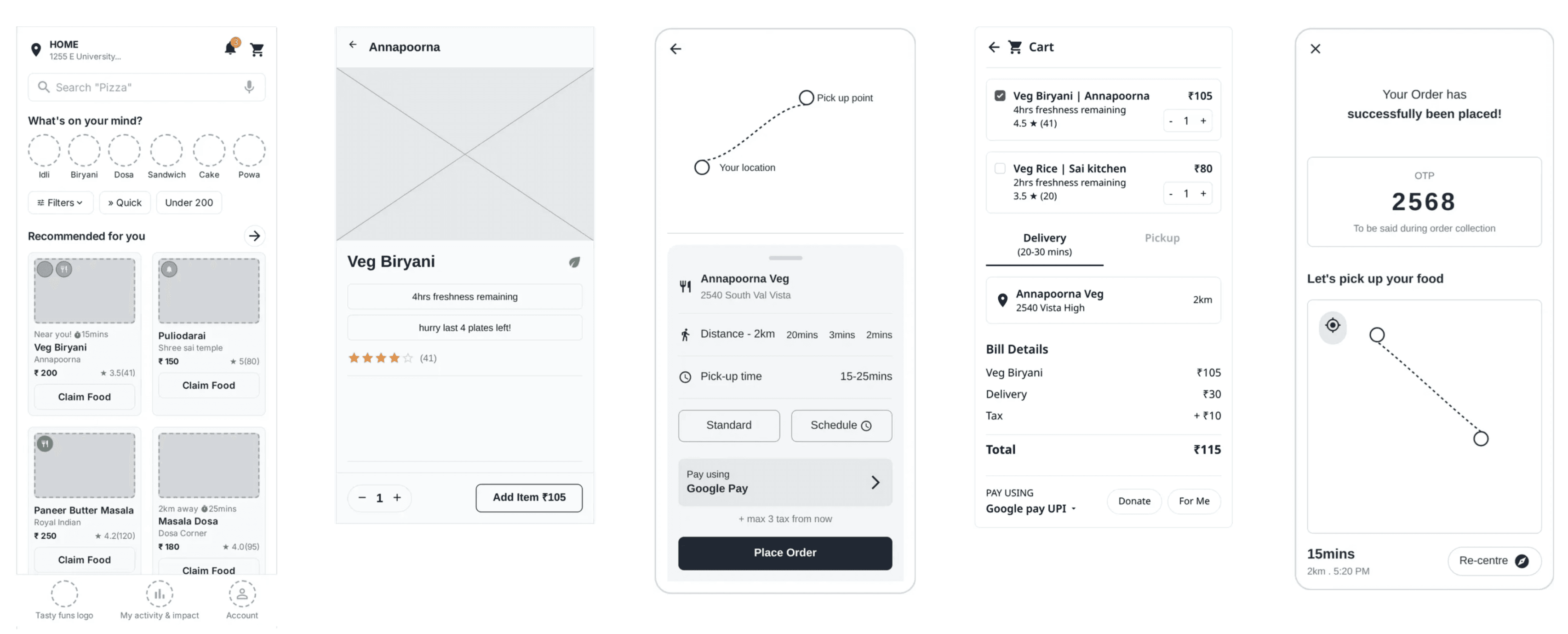
The high-fidelity wireframes applied Tasty Turns’ brand palette, typography, and visual elements to the established wireframe structure.
High fidelity wireframes
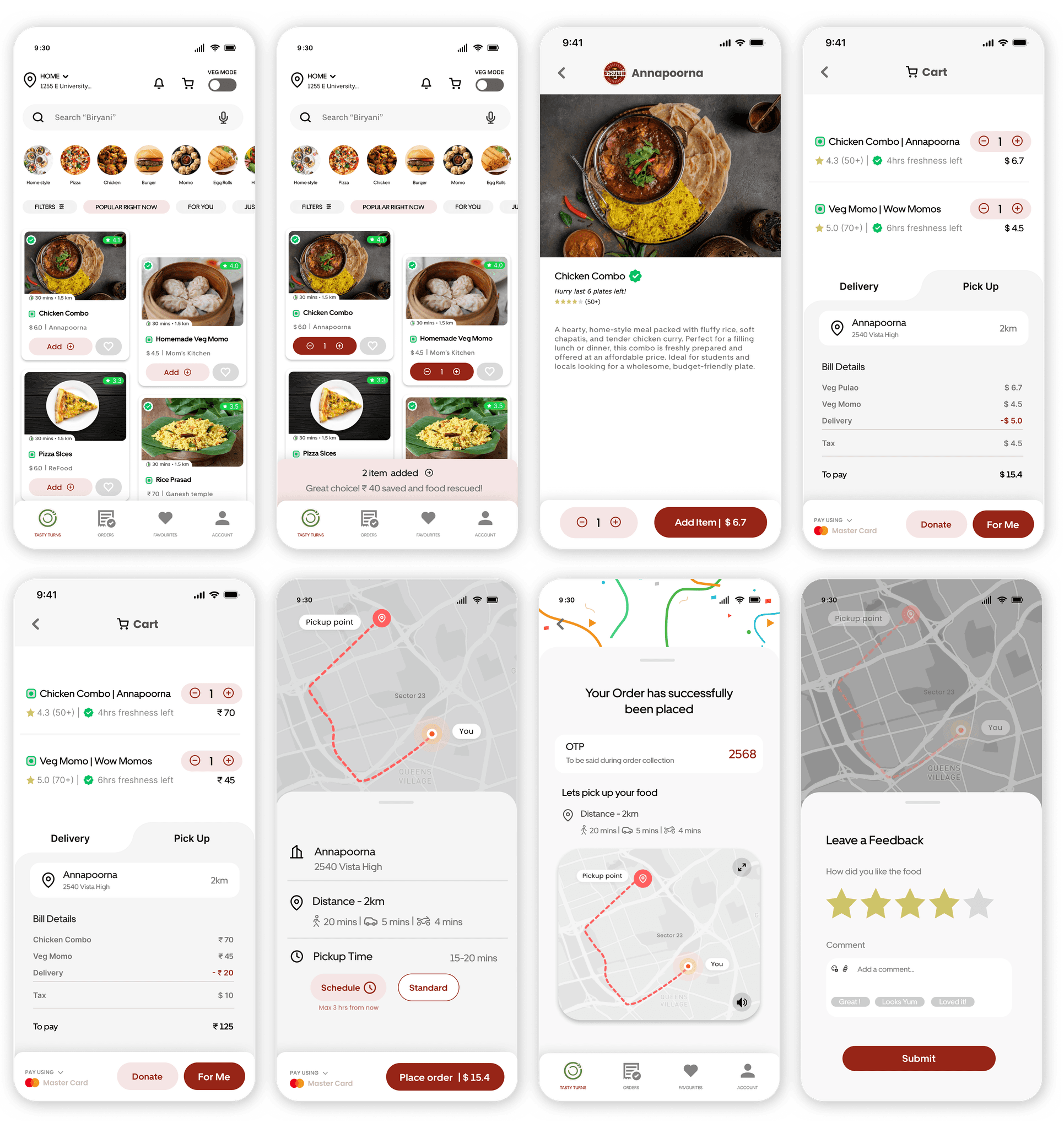
I transformed the high-fidelity designs into an interactive prototype using Figma. This prototype simulated the complete user journey — browsing, selecting items, adding to cart, opting food for them, and checking out.
prototype



Hi
Let’s build something impactful together
UX RESEARCH
WIREFRAMING & PROTOTYPING
USER INTERVIEW
Tasty turns
A collection of sharp, angular black prisms floating against a gradient dark background, showcasing a modern and sophisticated approach to digital 3D geometric composition.
Tools :
Figma, NotebookLM, Mermaid AI
Industry :
Food Tech
Project Duration :
Jan 2025 – May 2025
Problem :
Restaurants, homes, universities, temples, and community kitchens produce massive amounts of surplus food that often goes to waste. Meanwhile, many people struggle to access affordable, nutritious meals.
Solution:
Tasty Turns connects surplus food with people looking for affordable meals. Users can:
Browse hot, affordable late-night meals.
Discover surplus food before it’s wasted.
Donate meals or volunteer to redistribute food.
The first prototype focuses on the core ordering flow, making it simple and trustworthy.
Opportunity
Revolutionize the way surplus food is redistributed. Empower local communities to share, sell, or donate extra meals, while offering people reliable, low-cost food options.
The why :
The main problem I aim to address is the imbalance between food surplus and food scarcity.
Every day, large amounts of edible food are wasted across restaurants, schools, supermarkets, events, and even temples — while countless individuals struggle to access affordable meals. This gap between abundance and need wastes resources and misses the chance to feed those in need.
Overproduction & Mismanagement: Bulk cooking for unpredictable crowds leads to unavoidable surpluses.
No Redistribution Systems: Families or organizers lack a streamlined way to donate excess food immediately.
Cultural & Social Factors: Large gatherings prioritize abundance as a symbol of generosity, often leading to excess.
Human & Environmental Cost: Resources, money, and labor go to waste while people remain food insecure.
Real-World Example :
Generosity drives Indian weddings to over-cater for thousands of unpredictable guests, resulting in a massive food surplus. Lacking easy redistribution, this abundant, quality food is often wasted despite local community hunger.
Competitor Analysis :
I analyzed two leading initiatives—No Food Waste and City Harvest—and mapped their strengths and weaknesses to identify where Tasty Turns can uniquely bridge the gaps.
This analysis provided the foundation for defining our key features, differentiators, and opportunities for innovation.
Competitor Feature Comparison
User Interview:
Interviews with students and professionals uncovered:
Demand for affordable, late-night meals.
High willingness to volunteer or donate if safety and convenience were clear.
Low awareness of surplus food availability.
User Quotes :
📌 “I just want something light and healthy after work — not another oily biryani or fried rice.”
📌 “If I know how to find surplus food then I’ll definitely go and feed animals. I’m ready to volunteer.”
📌 “Even if it’s leftover food, if it’s hot, tasty, and clean, I’ll eat it.”
Perception of Surplus Food
Willingness to volunteer for animal, but needs guidance.
Users don’t know surplus food exists nearby.
Users are open to buying surplus food if it’s hygienic, properly packed, and fresh.
Pain Points
Hard to find surplus food nearby.
Concerns about freshness, pickup, and delivery flexibility.
Lack of simple donation options.
User Persona
To design Tasty Turns around real needs, I developed two core user personas based on research, interviews, and observation. These personas reflect the two primary audience segments most affected by food surplus and scarcity — and their motivations helped shape the features and flows of the app.
Root cause analysis
To understand why food waste and meal accessibility challenges persist, I conducted a Root Cause Analysis Using the 5 Why's technique and cause-and-effect mapping.
Key Takeaways
A central hub can connect donors, NGOs, volunteers, and late-night seekers.
Affordable, varied meals attract students and health-conscious users.
Better coordination reduces waste and boosts efficiency.
Design must serve diverse user groups for real impact.
Convergence and divergence
Generated multiple solutions — then narrowed to the most impactful: partnerships with venues, a transparent ordering system, and a volunteer network.
I created a user flow to visualize how customers would interact with Tasty Turns from browsing food items to making a purchase and optionally donating food. This allowed us to identify key decision points, minimize unnecessary steps, and ensure a seamless experience for both primary use cases — food ordering and food donation.
User Flow
Focused on layout, navigation, and clear calls to action across key screens to validate core structure before detailed UI design.
Low-Fidelity Wireframes
The high-fidelity wireframes applied Tasty Turns’ brand palette, typography, and visual elements to the established wireframe structure.
High fidelity wireframes
I transformed the high-fidelity designs into an interactive prototype using Figma. This prototype simulated the complete user journey — browsing, selecting items, adding to cart, opting food for them, and checking out.
prototype
Hi
Let’s build something impactful together
UX RESEARCH
WIREFRAMING & PROTOTYPING
USER INTERVIEW
Tasty turns
A collection of sharp, angular black prisms floating against a gradient dark background, showcasing a modern and sophisticated approach to digital 3D geometric composition.
Tools :
Figma, NotebookLM, Mermaid AI
Industry :
Food Tech
Project Duration :
Jan 2025 – May 2025
Problem :
Restaurants, homes, universities, temples, and community kitchens produce massive amounts of surplus food that often goes to waste. Meanwhile, many people struggle to access affordable, nutritious meals.
Solution:
Tasty Turns connects surplus food with people looking for affordable meals. Users can:
Browse hot, affordable late-night meals.
Discover surplus food before it’s wasted.
Donate meals or volunteer to redistribute food.
The first prototype focuses on the core ordering flow, making it simple and trustworthy.
Opportunity
Revolutionize the way surplus food is redistributed. Empower local communities to share, sell, or donate extra meals, while offering people reliable, low-cost food options.
The why :
The main problem I aim to address is the imbalance between food surplus and food scarcity.
Every day, large amounts of edible food are wasted across restaurants, schools, supermarkets, events, and even temples — while countless individuals struggle to access affordable meals. This gap between abundance and need wastes resources and misses the chance to feed those in need.
Overproduction & Mismanagement: Bulk cooking for unpredictable crowds leads to unavoidable surpluses.
No Redistribution Systems: Families or organizers lack a streamlined way to donate excess food immediately.
Cultural & Social Factors: Large gatherings prioritize abundance as a symbol of generosity, often leading to excess.
Human & Environmental Cost: Resources, money, and labor go to waste while people remain food insecure.
Real-World Example :
Generosity drives Indian weddings to over-cater for thousands of unpredictable guests, resulting in a massive food surplus. Lacking easy redistribution, this abundant, quality food is often wasted despite local community hunger.
Competitor Analysis :
I analyzed two leading initiatives—No Food Waste and City Harvest—and mapped their strengths and weaknesses to identify where Tasty Turns can uniquely bridge the gaps.
This analysis provided the foundation for defining our key features, differentiators, and opportunities for innovation.
Competitor Feature Comparison
User Interview:
Interviews with students and professionals uncovered:
Demand for affordable, late-night meals.
High willingness to volunteer or donate if safety and convenience were clear.
Low awareness of surplus food availability.
User Quotes :
📌 “I just want something light and healthy after work — not another oily biryani or fried rice.”
📌 “If I know how to find surplus food then I’ll definitely go and feed animals. I’m ready to volunteer.”
📌 “Even if it’s leftover food, if it’s hot, tasty, and clean, I’ll eat it.”
Perception of Surplus Food
Willingness to volunteer for animal, but needs guidance.
Users don’t know surplus food exists nearby.
Users are open to buying surplus food if it’s hygienic, properly packed, and fresh.
Pain Points
Hard to find surplus food nearby.
Concerns about freshness, pickup, and delivery flexibility.
Lack of simple donation options.
User Persona
To design Tasty Turns around real needs, I developed two core user personas based on research, interviews, and observation. These personas reflect the two primary audience segments most affected by food surplus and scarcity — and their motivations helped shape the features and flows of the app.
Root cause analysis
To understand why food waste and meal accessibility challenges persist, I conducted a Root Cause Analysis Using the 5 Why's technique and cause-and-effect mapping.
Key Takeaways
A central hub can connect donors, NGOs, volunteers, and late-night seekers.
Affordable, varied meals attract students and health-conscious users.
Better coordination reduces waste and boosts efficiency.
Design must serve diverse user groups for real impact.
Convergence and divergence
Generated multiple solutions — then narrowed to the most impactful: partnerships with venues, a transparent ordering system, and a volunteer network.
I created a user flow to visualize how customers would interact with Tasty Turns from browsing food items to making a purchase and optionally donating food. This allowed us to identify key decision points, minimize unnecessary steps, and ensure a seamless experience for both primary use cases — food ordering and food donation.
User Flow
Focused on layout, navigation, and clear calls to action across key screens to validate core structure before detailed UI design.
Low-Fidelity Wireframes
The high-fidelity wireframes applied Tasty Turns’ brand palette, typography, and visual elements to the established wireframe structure.
High fidelity wireframes
I transformed the high-fidelity designs into an interactive prototype using Figma. This prototype simulated the complete user journey — browsing, selecting items, adding to cart, opting food for them, and checking out.
prototype
Hi